1. Wall Applications
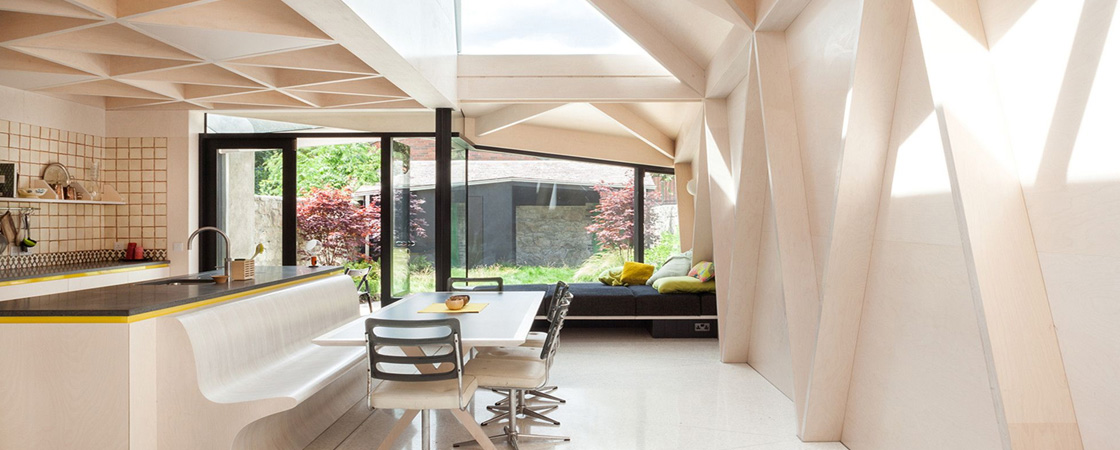
- Decorative Wall Cladding
- Panel systems that emphasize the natural wood texture
- Modern appearance with lacquered or oiled surfaces
- 3D-effect wall panels
- Acoustic Panels
- Perforated plywood providing sound insulation
- Used in studios, offices and residential spaces
- Partition Wall Systems
- Open-plan office partitions
- Used as transition elements within interior spaces
2. Ceiling Applications
- Suspended Ceiling Cladding
- Flat or coffered ceiling systems
- Creating geometric patterns
- Feature Ceilings
- Used to highlight specific areas of the ceiling
- Integrated with lighting systems
3. Furniture and Built-in Systems
- Built-in Cabinets
- Wardrobes and storage systems
- Wall-integrated designs
- Bookshelf Systems
- Wall shelves and bookcases
- Creative geometric shelving designs
- Under-Counter and Kitchen Cabinets
- Veneered plywood with a solid wood appearance
- Durable and cost-effective solution
4. Spatial Elements
- Feature Walls
- Focal points in living rooms or bedrooms
- Emphasis on natural materials
- Bars and Service Elements
- Bars between kitchens and living areas
- Mini service units
- Niches and Custom Storage
- Built-in niche shelving
- Custom display units for personal belongings
Choosing the Right Type of Plywood for Decoration
Application |
Recommended Plywood Type |
Features |
Wall Cladding |
Veneered Plywood |
Aesthetic surface, natural wood grain |
Furniture |
Laminated Plywood |
Scratch-resistant, easy to clean |
Bathroom / Wet Areas |
Marine Plywood |
Moisture-resistant, long-lasting |
Curved Surfaces |
Flex Plywood |
Flexible structure, easy to shape |
Cost-Effective Solutions |
White Laminated Plywood |
No painting required, clean appearance |
Design Tips and Trends
- Surface Finishes:
- Natural Look: Protection with water-based varnish or oil
- Colored Applications: Coloring with matte or gloss paint
- Special Finishes: Burnt wood and whitewash effects
- Installation Techniques:
- Concealed Connections: Hidden screw systems
- Geometric Joinery: Precision laser cutting
- Lighting Integration: Integration with LED strips
- Current Trends:
- Japandi Style: A simplified expression of natural textures
- Industrial Style: Raw plywood appearance
- Minimalist Approach: Clean lines and simple forms
- Sustainable Design: Recyclable materials
⚠️ Attention Points
- Moisture Balance: Select an adhesive suitable for the interior humidity level
- Edge Treatment: Properly finish all cut edges
- Fire Safety: Use fire-retardant plywood where required
- Budget Planning: Balance quality and appearance
Advantages
- Cost-Effective - More affordable than solid wood
- Flexible - Can adapt to various forms and designs
- Sustainable - Environmentally friendly due to efficient use of wood resources
- Lightweight - Easy to transport and install
- Durable - Low risk of cracking and warping
When using plywood in interior architecture, designs that highlight the material's natural texture are particularly popular. With proper workmanship and protection methods, plywood can remain durable and aesthetically appealing for many years.